Sorry, we're closed

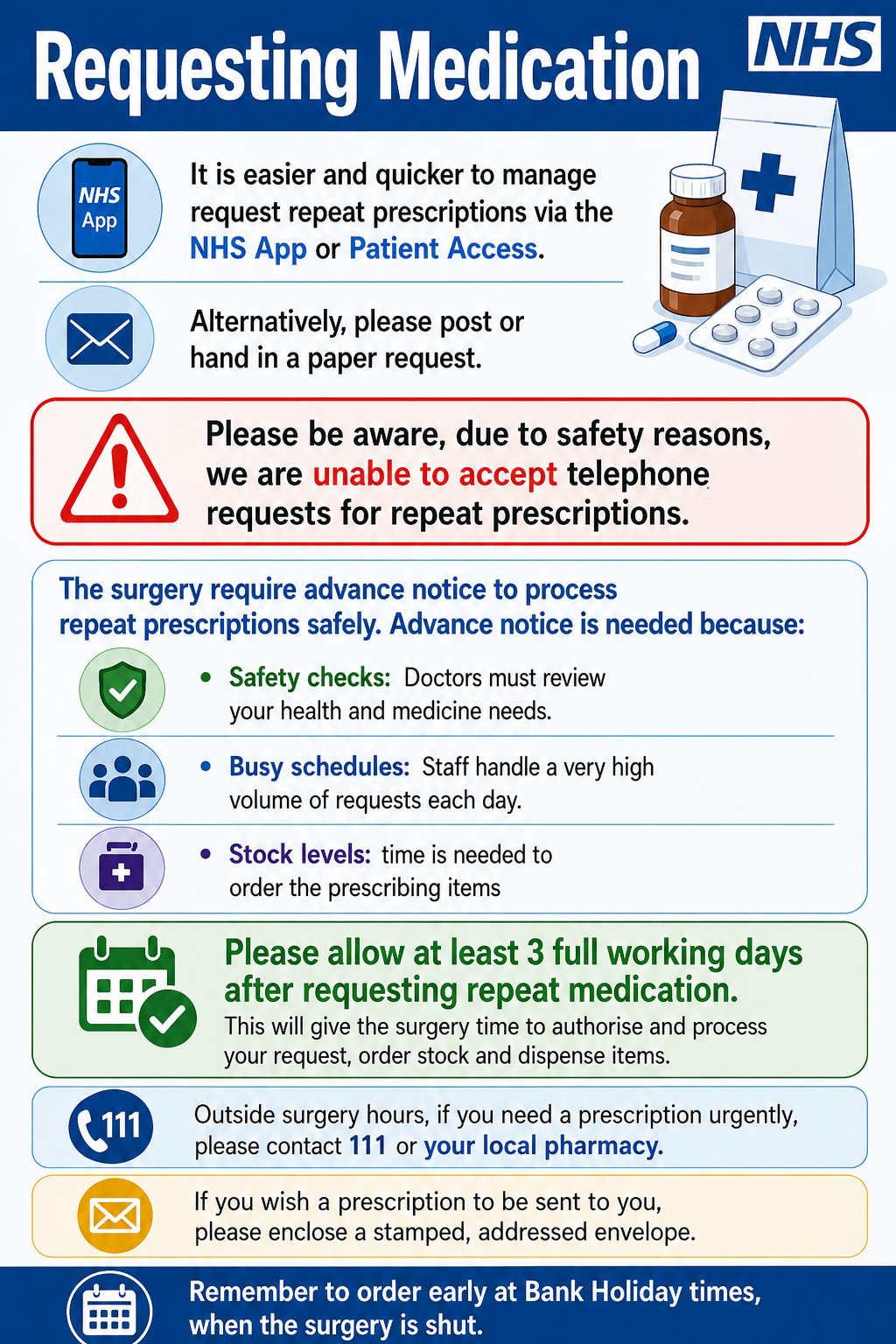
Newsletter September 2026 Who can get vaccinated this winter? ADHD Right to Choose – Accredited Providers Protect Yourself This Autumn – Covid and Flu Vaccinations 2026/27 Dr Silver Protected Learning Time Pharmaself Dispensary opening hours Medication requests Recruiting : Practice Nurse Infection and Prevention Control Alert – Higher Prevalence of Norovirus New GP joining Nettlebed surgery IMPORTANT – MINOR OPS Nettlebed Surgery is recruiting! Thank You to Our Patients – GP Patient Survey 2026 Results ADHD Shared Care at Nettlebed Surgery Message to Our Patients Following the Recent CQC Inspection Local Information about Meningococcal Disease (Meningitis) Breast Screening Unit Relocated Happy Feet Footcare Patient Transport for non-emergencies has changed Book your RSV vaccinations now Cervical Screening Programme You and Your GP Having Problems with your Hearing? Nettlebed Surgery Newsletter Patient Experience National Survey 2025 Weight Management Medication Update – June 2025 Weight Management Medication Update – June 2025 Adult Patients with ADHD
Measure Blood Pressure at Home
Monitoring your blood pressure using a home blood pressure monitor shows us how your blood pressure changes throughout a normal day. We also have a self-service blood pressure monitor in the Waiting Room at the surgery.
Choosing a Blood Pressure Monitor
To get accurate readings, it is important to use the right monitor and the right technique. Make sure that the home blood pressure monitor you choose has been listed as ‘clinically validated’ for accuracy by the British Hypertension Society.
There are many different kinds of home blood pressure monitor, but it is easiest to use a monitor that is fully automatic (digital). Choose one that measures your blood pressure at your upper arm, rather than at your wrist or finger. Upper-arm blood pressure monitors usually give the most accurate and consistent results. Ask your pharmacist for help to get the correct size of cuff for your arm.
Recording your Blood Pressure
We may contact you to request home blood pressure readings.
You can submit readings directly, using the link that we send to you via email. Alternatively, you can keep a Home Blood Pressure Diary and submit the paper record to Reception or bring it with you to your next appointment.
Please monitor and record your blood pressure at home for 7 consecutive days (unless you have been advised otherwise).
On each day, monitor your blood pressure on two occasions – in the morning (between 6 am and 12 noon) and again in the evening (between 6 pm and midnight). On each occasion take a minimum of two readings, leaving at least a minute between each.
If the first two readings are very different, take 2 or 3 further readings.
When recording your readings, the numbers you write down should be the same as those that appear on the monitor screen – do not round the numbers up or down.
You can also make a note of anything that could have affected your reading, such as feeling unwell or changes in your medication.
Opening Times
- Monday08:00am to 06:30pm
- Tuesday08:00am to 06:30pm
- Wednesday08:00am to 06:30pm
- Thursday08:00am to 06:30pm
- Friday08:00am to 06:30pm
- SaturdayCLOSED
- SundayCLOSED
Useful Links